


Popular articles



EA’s SEED turns 10 – what its R&D actually changed in EA games
Table of Content

Electronic Arts marked the 10-year milestone of SEED – its in-house research group founded to probe future-facing technology for interactive entertainment. The team outlined how prototypes became production-ready methods, tools and systems adopted across EA studios. The overview spans rendering, animation, content workflows and AI. Below are the confirmed projects, where they appeared, and what changed for players and developers.
SEED’s brief remains the same: go beyond standard pipelines and explore deep, foundational tech that can shift how games are made and played – from ray-traced lighting to machine learning and generative approaches.

From ray tracing demos to real-time global illumination
SEED’s early rendering showcase, PICA PICA, focused on ray tracing – modelling light transport to reach photorealistic lighting and reflections at real-time performance years before it became common in games. The work demonstrated dynamic global illumination and ray-traced lighting aimed at near-cinematic results.
That thread continued with GIBS (global illumination based on surfels), developed with the Frostbite team and deployed in EA SPORTS College Football 25. Using surfels – small disc-like surface representations – the technique delivered real-time indirect lighting for large open environments, powering more than 150 stadiums and dynamic day–night cycles without prebaked lighting.
Animation and character realism: ML deformers and richer motion
- SEED Swish in Madden NFL 21 – one of the first machine learning–based deformers shipped in games, running in real time for player models. It used neural networks to simulate cloth behavior with realistic stretch, flow and collisions, moving toward learned physical systems instead of hand-tuned setups.
- Dragon Age: The Veilguard – SEED’s research contributed to higher-quality, more diverse motion data, allowing more expressive characters without compromising performance, according to EA’s summary.
Audio-to-face animation and face scanning workflows
SEED’s Voice2Face introduced audio-driven facial animation that generates lip and facial movements directly from recorded speech. EA reports its use in Battlefield 6 cinematics and in crowd chants for EA SPORTS FC 25, reducing production time while maintaining quality.
Read also our article: Roundnet lands on Xbox: Spikeball Smash launches worldwide
In parallel, SEED partnered with internal teams to establish new workflows for LightStage, the high-fidelity facial scanning technology. The updated process enabled more precise head scans, capturing fine details and subtle expressions for in-game character models.
Smarter systems with AI – from goalkeepers to fair play
- EA SPORTS FC 26 goalkeeper – a reinforcement learning–trained keeper that adapts positioning by analyzing player movement and adjusting like real-world counterparts, introducing adaptive ML behavior in that role.
- Apex Legends security – large-scale systems to detect unfair play flagged suspected cheating across millions of matches, supporting fair gameplay at scale.
Where SEED’s tech landed – highlights by project
The table below summarizes notable SEED efforts, their domains and where EA reports they have been applied. Summary table: SEED deployments and outcomes.
What’s next
EA positions SEED to continue partnering with internal studios on ray-traced lighting, machine learning and generative AI, aiming to shape future EA production workflows and player-facing systems over the coming years.
Bottom line for players
Why this matters – Much of SEED’s work is already inside shipped titles, from real-time global illumination in stadiums to ML-driven animation and AI-supported fairness. Expect ongoing tech shifts to appear first as behind-the-scenes tools and then as visible upgrades to visuals, character expressiveness and smarter gameplay systems.
Category

Share the news


Meet the Author


Article:
Read all


Solid Snake joins Rainbow Six Siege on March 3 with intel‑driven tools and scavenging gameplay. A few weeks later, a limited‑time 4v4 infiltration mode arrives alongside map and balance updates.
 February 15, 2026
 3
3
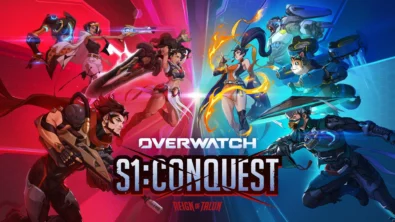
Season 1 opens the first chapter with Domina, Emre, Mizuki, Anran, and Jetpack Cat, plus the Conquest meta race between Overwatch and Talon. The world will update in real time as the story unfolds.
February 14, 2026
3
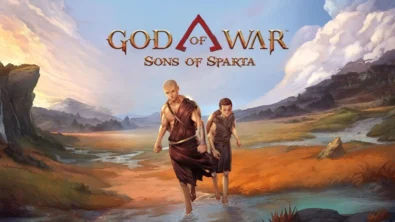
Kratos’ Spartan youth becomes playable in God of War Sons of Sparta – a canon, pixel‑art 2D prequel on PS5 with customizable spear‑and‑shield combat, Gifts of Olympus, and returning voice talent.
February 13, 2026
5

Ancient embalming, step by step – a new museum installation built on Assassin’s Creed Origins’ Discovery Tour lets visitors explore mummification interactively at Musée de l’Homme, open November 2025-May 2026.
February 13, 2026
6
Read also
Solid Snake joins Rainbow Six Siege on March 3 with intel‑driven tools and scavenging gameplay. A few weeks later, a limited‑time 4v4 infiltration mode arrives alongside map and balance updates.
February 15, 2026
3
Kratos’ Spartan youth becomes playable in God of War Sons of Sparta – a canon, pixel‑art 2D prequel on PS5 with customizable spear‑and‑shield combat, Gifts of Olympus, and returning voice talent.
February 13, 2026
5
Ancient embalming, step by step – a new museum installation built on Assassin’s Creed Origins’ Discovery Tour lets visitors explore mummification interactively at Musée de l’Homme, open November 2025-May 2026.
February 13, 2026
6
From training mode to centre stage: Rainbow Six Siege’s debut 1v1 circuit lands at the Six Invitational in Paris. Four regions, more than 3,200 entrants, semifinals Feb 14 and final Feb 15 for 5,000 US dollars.
February 13, 2026
5
Blizzard links its 2026 milestones with a cross‑franchise Showcase and confirms BlizzCon’s return later this year – with more announcements and “surprises” still queued, says president Johanna Faries.
February 13, 2026
5

High On Life 2 launches with day-one Game Pass Ultimate support, while Narrative Director Alec Robbins explains how the team crafts jokes with players—shaping character-driven, reactive comedy.
February 13, 2026
6
From a Star Trek survival-strategy take to stealth with Styx, eerie Backrooms horror, and management sims, Xbox’s February 17-20 slate packs 14 launches with Series X|S optimizations and cross-platform perks.
February 13, 2026
7

First full gameplay for CONTROL Resonant runs on PS5 Pro, spotlighting Dylan Faden in a reality-bending Manhattan with vast zones and Gravity Anomalies. Launch set for 2026 across console and PC ecosystems.
February 13, 2026
4
Borderlands 4 sets a co-op goal for this weekend: hit 500,000 successful teammate revives between February 12-15 to unlock a universal cosmetic skin. A minor update adds three Weekly Big Encore boss fights to raise the stakes.
February 13, 2026
6
A milestone collection bundles five classic Rayman versions, a first-ever playable SNES prototype, reimagined music, modern assist options, and over 50 minutes of developer interviews.
February 13, 2026
6

Співпраця
Співпраця - текст
TopGame Newsletter!
Unlock exclusive gaming deals, fresh guides, and insider picks — straight to your inbox. No spam, just real content for real players.
