


Popular articles



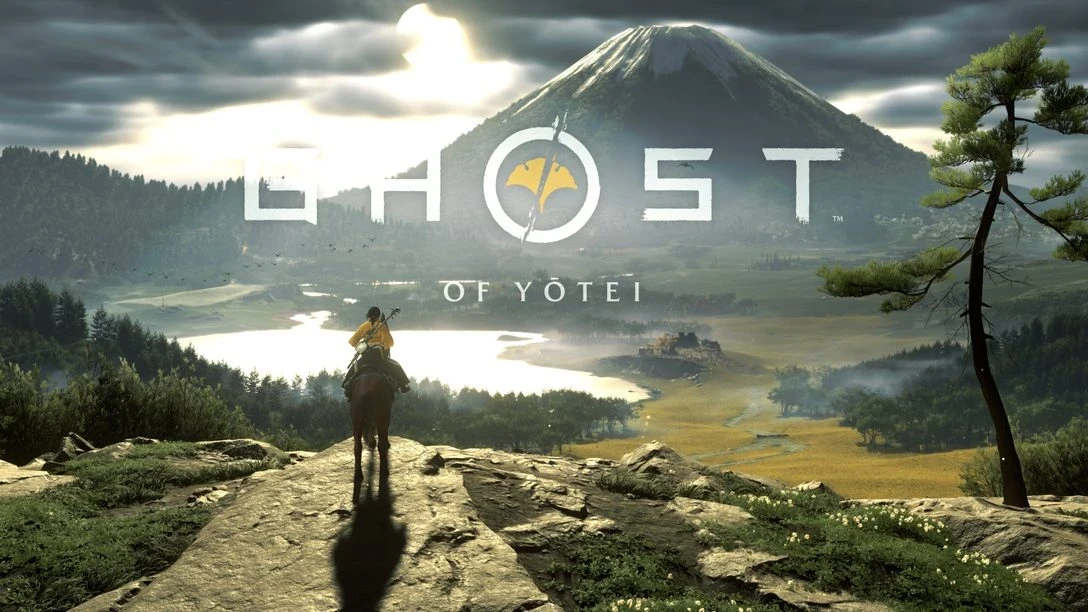
Ghost of Yōtei: how Sucker Punch built a wilder, faster PS5 world
Table of Content

Sucker Punch has outlined the technology powering Ghost of Yōtei, focusing on free exploration with long sightlines, richer environmental interaction and a stable frame rate on PlayStation 5. The studio describes upgrades to world rendering, character simulation, atmosphere, and streaming. PS5 Pro adds options for ray‑traced global illumination targeting 60 frames per second and PlayStation Spectral Super Resolution (PSSR) upsampling. Below are the key takeaways from the official technical brief.
The team emphasizes less intrusive guidance, more flexible combat presentation, and memorable story moments – all supported by engine changes aimed at pushing density, clarity, and responsiveness across an untamed Hokkaido setting.
Open vistas and a denser wilderness
To let players spot points of interest from far away, Sucker Punch reworked distant rendering for terrain, mountains and vegetation. Distant mountains are now baked from models and detailed materials into higher‑detail textures. The studio also doubled the amount of grass and renderable items the GPU compute renderer can generate.
- In one cited shot, over one million trees, rocks and bushes are culled down to about sixty thousand items for G‑buffer rendering.
- Procedural‑assisted authoring and GPU compute culling minimize CPU overhead – running occlusion culling, memory allocation, and draw record creation on the GPU before stitching command lists on the CPU.
- These techniques also drive runtime content like broad flower fields, ropes and chains.
Interaction: cuttable grass and deformable snow
Environmental feedback is a pillar of the world design. Grass and small plants respond to wind and character motion, and a new “cut buffer” system allows weapon sweeps to slice vegetation, spawning particles from geometry above the cut line.
Hokkaido’s winters needed more than footprints. A terrain tessellation and deformation pipeline renders particles and geometry into a displacement buffer, letting deep snow compress and shear in real time as characters walk, roll, and fight. The same approach knocks snow off trees and bushes, with a snow sparkle effect driven by stable screen‑space noise.
Skies, clouds and atmosphere
With Mt. Yōtei often wreathed in cloud, the team enabled clouds to render in front of world geometry and move faster without artifacts. Each cloud texel stores its average visible depth from the camera, enabling parallax mapping as clouds scroll. By also storing the average visible squared depth, the engine reconstructs a statistical opacity distribution per ray to correctly occlude geometry like mountains.
Volumetric atmosphere builds on Ghost of Tsushima’s look with local fog volumes computed via PS5’s expanded 16‑bit floating point GPU instructions. A light‑space cloud shadow map generates crepuscular “god rays” that remain visible far from the camera; artists can place targets to increase the odds of rays hitting key locations.
Characters, cloth and particles
Atsu’s outfits rely on a layered GPU compute cloth system that supports multiple simulated layers, cloth‑to‑cloth collisions, and heuristics to run many cloth instances efficiently. The studio’s GPU particle systems now sample terrain material, deformation, and water flow – for example, particles landing on and sliding down a river surface.
Read also our article: Battlefield 6 details: destruction upgrades, new 64-player mode
To anchor characters in the scene, the engine splats data into a directional grid around the character, layering texture effects to make them appear wet, muddy, bloody or snowy depending on context.
A time‑shift mechanic lets players swap to the past to explore Atsu’s family history. The engine changes skeleton and geometry while preserving character state and animation, and adjusts background and lighting instantly via SSD speed and targeted prefetching. The transition is masked by animated particles sampling the pre‑transition frame buffer.
Ray tracing and PS5 Pro enhancements
Rather than mirror‑like reflections, ray tracing is used to augment global illumination. An automated baked lighting model is complemented by short‑range ray‑traced GI (RTGI). This required changes to the mesh streaming format to dynamically decompress acceleration structures for the ray tracing hardware.
- On PS5 Pro, players can enable RTGI targeting 60 frames per second thanks to more efficient ray tracing hardware.
- The frame was rebuilt around dynamic resolution with upsampling to leverage PSSR. PSSR needed only minor tweaks (including conservative rasterization for small particles) and proved more stable under motion and better at reconstructing fine foliage and architectural details than the studio’s standard upsampler.
Streaming and load times
Sucker Punch continues its fast‑loading philosophy. Data is preprocessed so each location or terrain tile needs only a handful of SSD reads and patching operations to load gameplay‑critical data. The engine then requests only the texture mips and mesh LODs required for the first frame – one read per element.
Throughout development the team “dogfoods” the shipping systems – programmers, artists and designers test with the same loading tech used in the final build – to keep performance characteristics representative.
Bottom line – why it matters for players
Ghost of Yōtei’s tech push serves a clear design goal: freer exploration with immediate, tactile feedback in a harsh wilderness. For players, that translates to clearer distant cues, more interactive terrain and foliage, richer atmosphere, and faster traversal between places – with PS5 Pro adding RTGI and PSSR for sharper, more stable visuals.
Category
Share the news


Meet the Author


Article:
Read all

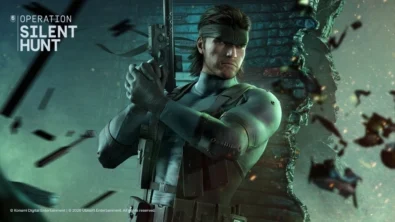
Solid Snake joins Rainbow Six Siege on March 3 with intel‑driven tools and scavenging gameplay. A few weeks later, a limited‑time 4v4 infiltration mode arrives alongside map and balance updates.
 February 15, 2026
 3
3
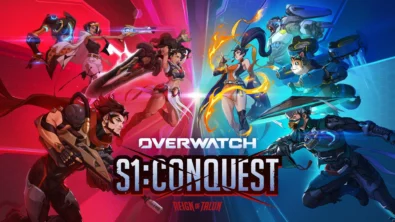
Season 1 opens the first chapter with Domina, Emre, Mizuki, Anran, and Jetpack Cat, plus the Conquest meta race between Overwatch and Talon. The world will update in real time as the story unfolds.
February 14, 2026
3
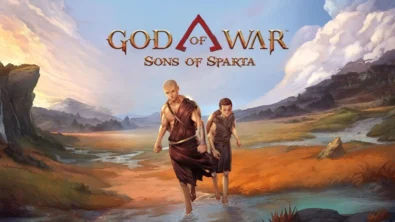
Kratos’ Spartan youth becomes playable in God of War Sons of Sparta – a canon, pixel‑art 2D prequel on PS5 with customizable spear‑and‑shield combat, Gifts of Olympus, and returning voice talent.
February 13, 2026
5
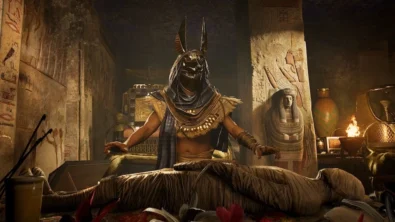
Ancient embalming, step by step – a new museum installation built on Assassin’s Creed Origins’ Discovery Tour lets visitors explore mummification interactively at Musée de l’Homme, open November 2025-May 2026.
February 13, 2026
6
Read also
Solid Snake joins Rainbow Six Siege on March 3 with intel‑driven tools and scavenging gameplay. A few weeks later, a limited‑time 4v4 infiltration mode arrives alongside map and balance updates.
February 15, 2026
3
Kratos’ Spartan youth becomes playable in God of War Sons of Sparta – a canon, pixel‑art 2D prequel on PS5 with customizable spear‑and‑shield combat, Gifts of Olympus, and returning voice talent.
February 13, 2026
5
Ancient embalming, step by step – a new museum installation built on Assassin’s Creed Origins’ Discovery Tour lets visitors explore mummification interactively at Musée de l’Homme, open November 2025-May 2026.
February 13, 2026
6
From training mode to centre stage: Rainbow Six Siege’s debut 1v1 circuit lands at the Six Invitational in Paris. Four regions, more than 3,200 entrants, semifinals Feb 14 and final Feb 15 for 5,000 US dollars.
February 13, 2026
5
Blizzard links its 2026 milestones with a cross‑franchise Showcase and confirms BlizzCon’s return later this year – with more announcements and “surprises” still queued, says president Johanna Faries.
February 13, 2026
5

High On Life 2 launches with day-one Game Pass Ultimate support, while Narrative Director Alec Robbins explains how the team crafts jokes with players—shaping character-driven, reactive comedy.
February 13, 2026
6
From a Star Trek survival-strategy take to stealth with Styx, eerie Backrooms horror, and management sims, Xbox’s February 17-20 slate packs 14 launches with Series X|S optimizations and cross-platform perks.
February 13, 2026
7
First full gameplay for CONTROL Resonant runs on PS5 Pro, spotlighting Dylan Faden in a reality-bending Manhattan with vast zones and Gravity Anomalies. Launch set for 2026 across console and PC ecosystems.
February 13, 2026
4
Borderlands 4 sets a co-op goal for this weekend: hit 500,000 successful teammate revives between February 12-15 to unlock a universal cosmetic skin. A minor update adds three Weekly Big Encore boss fights to raise the stakes.
February 13, 2026
6
A milestone collection bundles five classic Rayman versions, a first-ever playable SNES prototype, reimagined music, modern assist options, and over 50 minutes of developer interviews.
February 13, 2026
6

Співпраця
Співпраця - текст
TopGame Newsletter!
Unlock exclusive gaming deals, fresh guides, and insider picks — straight to your inbox. No spam, just real content for real players.
