


Popular articles



CarbonXmade turns captured CO₂ into everyday products
Table of Content

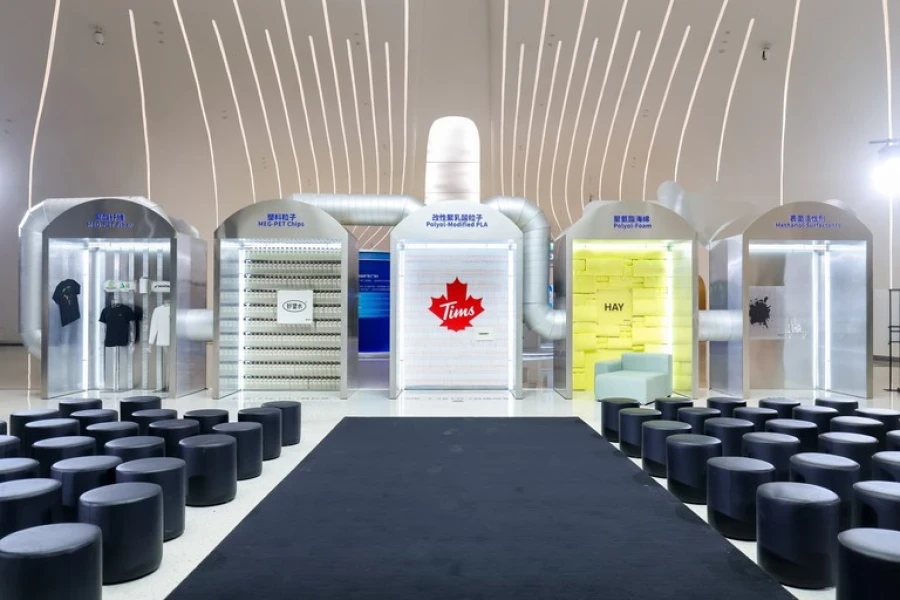
At the Sustainable Social Value Innovation Summit on December 3, Tencent’s CarbonXmade initiative showcased how captured CO₂ is being converted into usable materials across consumer and industrial sectors. The program presented three market-ready items developed with partners HAY, Tims China and Sasol. The focus is practical uptake – moving carbon utilization from pilots to products. Organizers position the effort as an ecosystem play designed to reduce fragmentation and get CCU into stores and operations faster.
What CarbonXmade targets: the CCU “valley of death”
Carbon Capture and Utilization has long promised to turn emissions into feedstocks, yet costs, fragmented supply chains and low awareness have slowed adoption. CarbonXmade is set up as a connector – matching global brands with decarbonization tech teams to accelerate prototyping and shorten the path from lab work to retail shelves. The aim is to prove that carbon can be a resource, not only a waste stream, by integrating it into existing product categories.
New product lineup revealed on December 3
- HAY – Furniture: The HAY Mags Sofa in carbon‑sequestering foam replaces conventional petroleum-based foam with a CCU-derived alternative while maintaining high-end design standards.
- Tims China – Lifestyle: Around 400 locations are rolling out CO₂‑based biodegradable eco-straws that mirror the tactile feel of traditional polylactic acid straws.
- Sasol – Industrial: A CO₂‑based surfactant was introduced with potential applications across car wash solutions, textile treatment and coatings, highlighting a path to industrial scalability.
At a glance: products and use cases
The table below summarizes the announced items and where they fit. Each entry is positioned as a market-ready implementation rather than a lab prototype.
| Partner | Product | CO₂ Integration | Use Cases |
| HAY | Mags Sofa (carbon‑sequestering foam) | Foam replaces petroleum-based alternative | Furniture upholstery |
| Tims China | CO₂‑based eco-straws | Biodegradable straws with PLA-like feel | Food and beverage service at ~400 locations |
| Sasol | CO₂‑based surfactant | Converted carbon in surfactant chemistry | Car wash, textile treatment, coatings |
Read also our article: Ubisoft brings March of Giants in-house as team builds next update
Watch the official overview
Event video link (official source):
Why this matters
The rollout signals a broader shift – from lab demos to real supply chains. By positioning captured carbon as an input for furniture, food service and industrial chemicals, CarbonXmade underscores that progress toward Net Zero runs through manufacturing decisions as much as energy choices. For players tracking tech adoption cycles, the takeaway is familiar: once ecosystem partners align, new materials move faster from prototype to production – and into everyday life.
Final takeaway – Building with what we save
CarbonXmade frames decarbonization as material substitution rather than only reduction. The December 3 announcements show that captured CO₂ can become foam, straws and surfactants – tangible items that embed climate tech into products people already use. That makes the next phase of CCU less about promises and more about deployment.
Category


Share the news


Meet the Author


Article:
Read all


Solid Snake joins Rainbow Six Siege on March 3 with intel‑driven tools and scavenging gameplay. A few weeks later, a limited‑time 4v4 infiltration mode arrives alongside map and balance updates.
 February 15, 2026
 3
3

Season 1 opens the first chapter with Domina, Emre, Mizuki, Anran, and Jetpack Cat, plus the Conquest meta race between Overwatch and Talon. The world will update in real time as the story unfolds.
February 14, 2026
3
Kratos’ Spartan youth becomes playable in God of War Sons of Sparta – a canon, pixel‑art 2D prequel on PS5 with customizable spear‑and‑shield combat, Gifts of Olympus, and returning voice talent.
February 13, 2026
5

Ancient embalming, step by step – a new museum installation built on Assassin’s Creed Origins’ Discovery Tour lets visitors explore mummification interactively at Musée de l’Homme, open November 2025-May 2026.
February 13, 2026
6
Read also
Solid Snake joins Rainbow Six Siege on March 3 with intel‑driven tools and scavenging gameplay. A few weeks later, a limited‑time 4v4 infiltration mode arrives alongside map and balance updates.
February 15, 2026
3
Kratos’ Spartan youth becomes playable in God of War Sons of Sparta – a canon, pixel‑art 2D prequel on PS5 with customizable spear‑and‑shield combat, Gifts of Olympus, and returning voice talent.
February 13, 2026
5
Ancient embalming, step by step – a new museum installation built on Assassin’s Creed Origins’ Discovery Tour lets visitors explore mummification interactively at Musée de l’Homme, open November 2025-May 2026.
February 13, 2026
6

From training mode to centre stage: Rainbow Six Siege’s debut 1v1 circuit lands at the Six Invitational in Paris. Four regions, more than 3,200 entrants, semifinals Feb 14 and final Feb 15 for 5,000 US dollars.
February 13, 2026
5
Blizzard links its 2026 milestones with a cross‑franchise Showcase and confirms BlizzCon’s return later this year – with more announcements and “surprises” still queued, says president Johanna Faries.
February 13, 2026
5

High On Life 2 launches with day-one Game Pass Ultimate support, while Narrative Director Alec Robbins explains how the team crafts jokes with players—shaping character-driven, reactive comedy.
February 13, 2026
6
From a Star Trek survival-strategy take to stealth with Styx, eerie Backrooms horror, and management sims, Xbox’s February 17-20 slate packs 14 launches with Series X|S optimizations and cross-platform perks.
February 13, 2026
7

First full gameplay for CONTROL Resonant runs on PS5 Pro, spotlighting Dylan Faden in a reality-bending Manhattan with vast zones and Gravity Anomalies. Launch set for 2026 across console and PC ecosystems.
February 13, 2026
4

Borderlands 4 sets a co-op goal for this weekend: hit 500,000 successful teammate revives between February 12-15 to unlock a universal cosmetic skin. A minor update adds three Weekly Big Encore boss fights to raise the stakes.
February 13, 2026
6

A milestone collection bundles five classic Rayman versions, a first-ever playable SNES prototype, reimagined music, modern assist options, and over 50 minutes of developer interviews.
February 13, 2026
6

Співпраця
Співпраця - текст
TopGame Newsletter!
Unlock exclusive gaming deals, fresh guides, and insider picks — straight to your inbox. No spam, just real content for real players.
